
Lisa Murkowski Net Worth, Age, Height, Bio, Birthday, Wiki!

Exploring the core elements of Lisa Murkowski Net Worth, Age, Height, Bio, Birthday, Wiki—check out the main takeaways.
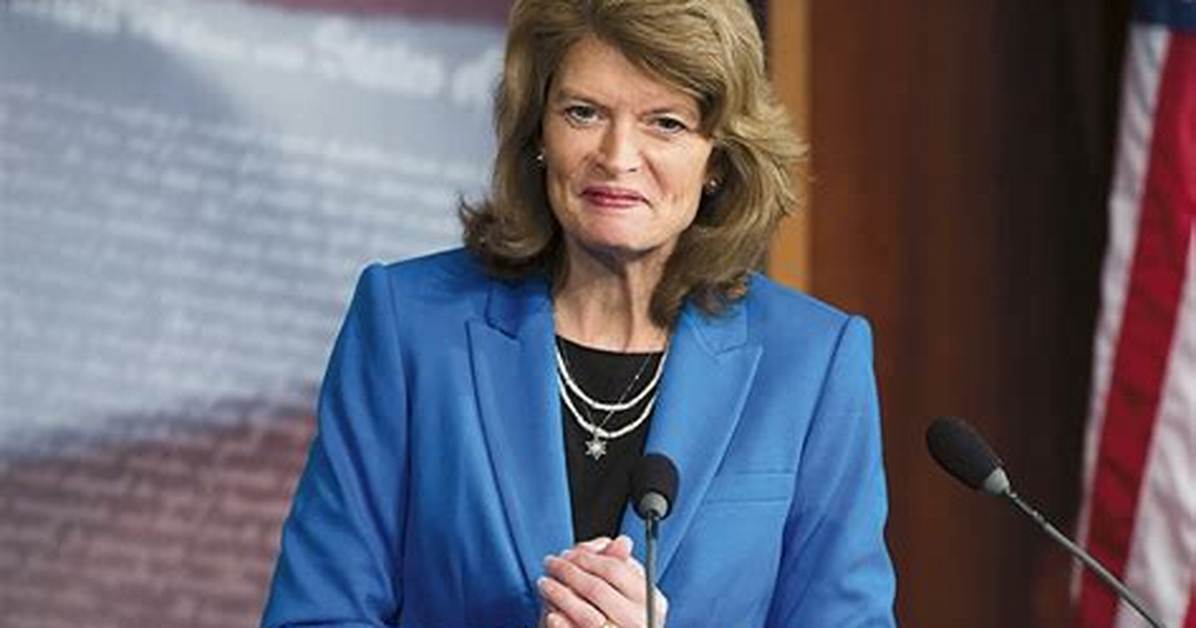
Lisa Murkowski is one of the richest Politician from United States. According to our analysis, Wikipedia, Forbes & Business Insider, Lisa Murkowski's net worth $5 Million. (Last Update: December 11, 2023)
Must Read
In 1980, she received a Bachelor’s degree in Economics from Georgetown University.
She became the third person to win a United States Senate Election through write-in votes in 2010.
Lisa Ann Murkowski (/m ɜːr ˈ k aʊ s k iː / ; born May 22, 1957) is an American politician serving as the senior United States Senator from Alaska, having held that seat since 2002. She is a member of the Republican Party, and is the second most senior Republican woman in the Senate. Along with Susan Collins from Maine, she is frequently described as one of the most moderate Republicans in the Senate and is a crucial swing voter.
| Net Worth | $5 Million |
| Salary | Under Review |
| Source of Income | Politician |
| Cars | Not Available |
| House | Living in own house. |
Murkowski is the daughter of former U.S. Senator and Governor of Alaska, Frank Murkowski. Before her appointment to the Senate, she served in the Alaska House of Representatives and was eventually elected Majority Leader. She was appointed to the U.S. Senate by her father, who resigned his seat in December 2002 to become the Governor of Alaska. She completed her father’s unexpired term, which ended in January 2005.
Murkowski was elected to a full six-year term against former Democratic Governor Tony Knowles in the 2004 election after winning a primary challenge by a large margin. The two were in a dead heat in polls. The centrist Republican Main Street Partnership, which wanted to run TV ads for Murkowski, was told no air time was left to buy. Near the end of the general campaign, senior U.S. Senator Ted Stevens shot campaign ads for Murkowski and claimed that if a Democrat replaced Murkowski, the State of Alaska would likely receive fewer federal dollars.
James Sterling reports on renewable energy developments, climate policy, ecological conservation, and green tech innovations around the globe.
